
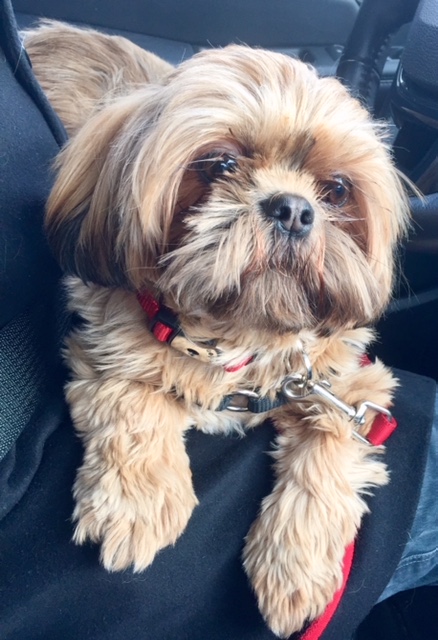
My Mom and Dad take really good care of us. They take us for walks, they feed us really good food, they make sure we are loved – and this year they made sure we got a special shot to fight off something called the puppy flu. Mom said this was really important for us to do, because this year there is a risk of puppies in our area getting sick. I was a little scared to get a shot. But I got to sit and ride with my Dad to the doctor, and he held my paw when I was getting my shot, and then I got a yummy special treat. We had to get two shots – the first one and then something called a “booster” a couple weeks later. I was much more brave for the second shot!
Mom explained to us what the puppy flu is and why it is important for us to be careful, because she doesn’t want us to get sick. Mom said in addition to getting shots, we are also being careful not to go to the park or be exposed to other puppies, who may be sick. She told us we had to be especially careful, because we have such cute little noses! Not sure why my cute nose makes a difference, but Mom is a nurse and pretty smart. So, I always listen to my Mom.
This is what I learned from my Mom. Canine influenza virus (CIV) or the Puppy (Dog) flu is a viral infection that can affect our lungs making it hard for us to breath. It is found primarily in dogs but, it can also affect cats. Mom explained there are two different types of this virus found in the US – these are called H3N8 and H3N2. These types of the puppy flu have been found in No. California and Nevada, and now in our state, Oregon. People need to check with their own Veterinarians, because other areas in the Country may be affected as well. Mom also said just because she likes to call all dogs “puppies” doesn’t mean the flu just affects puppies, it can make all ages of dogs sick, which is why it is important to be careful.
The Oregon Public Health Veterinarian, Dr. Emilio DeBess, is telling dog owners to take steps to protect their dogs from both types of the virus. He explained that dogs who are “at-risk” need to take special care. Dogs in close contact with infected dogs in places such as kennels, groomers, daycare facilities, shelters and rescues are at increased risk of infection. Also dogs with pre-existing heart disease or lung disease, some senior dogs, and “brachycephalic” breeds (this long word means dogs like me with short noses and flat faces – but really cute faces) may also be at risk.
It is a very strong virus and it can be passed easily to other dogs. Mom explained that puppy flu is an airborne disease, much like kennel cough (Bordetella bronchiseptica). The virus travels in droplets from a cough or sneeze and can be transmitted by contact with contaminated objects (for instance, a chew toy).
There is less risk if your dog stays at home and rarely contacts other dogs. But, if your dog is boarded, goes to daycare, or the dog park, your pup may be at a higher risk. If your dog is coughing, it should not go to public places where it could contact other dogs until your veterinarian agrees it’s safe for your dog to go out.
Mom explained it was important to know what to watch for with the dog flu. The most common clinical signs are coughing, loss of appetite, lethargy, fever, sneezing, and discharge from the eyes and/or nose. It is a strong virus and dogs can get sick really fast, within 24 hours of of being with an infected pup. Mom explained there are also dogs they call carriers. These dogs don’t show symptoms, but can make other dogs sick for weeks. Most dogs diagnosed with canine influenza experience a mild form of the disease, but those at higher risk can get very sick.
Mom says to Call your veterinarian if your dog develops a cough, especially if your dog has received their kennel cough (Bordetella) vaccine. If your dog is coughing, it is important not to take your pup out to locations where the pup may infect other dogs. Early intervention is key to limiting community outbreaks and making sure other dogs don’t get sick. Be sure to tell your veterinarian if your dog has been boarded, sent to the groomer or involved in any social activities (dog park, day care, etc.) within the last month. This will help your vet know you might have been in contact with a sick dog.
Mom said to remember – coughing can be related to a variety of significant diseases or conditions. Your veterinarian is best qualified to diagnose your dog.
Mom also wants me to remind you to be sure to take precautions to be sure your pup won’t get the puppy flu. If you handle a sick pup, be sure to wash your hands before touching another pup. Better yet, it’s best to avoid contact with pups that appear sick.
Vaccines are available and just like my Dad did, if you hold their paw, your pup won’t be scared to get their shots. Discuss with your veterinarian whether it is appropriate for your pet to be vaccinated. For us, our Veterinarian sent Mom and Dad an email telling them all about the risk of the flu and recommending we come in to be sure we were kept safe. We love how our doctor takes such good care of us! Just like my Mom and Dad take such good care of us!! We are definitely very blessed puppies..
Information obtained from Oregon Veterinary Medical Association. Canine Influenza Virus: Information for Dog Owners. 2018-02-16 08:00:00
 Tales of Shelby the ShihTzu